August 11, 2026
STR pool care guide for Blue Olive Pools — targets Hill Country property managers, covers turnover-based maintenance, flood recovery, and equipment tips, ends with a consultation CTA.
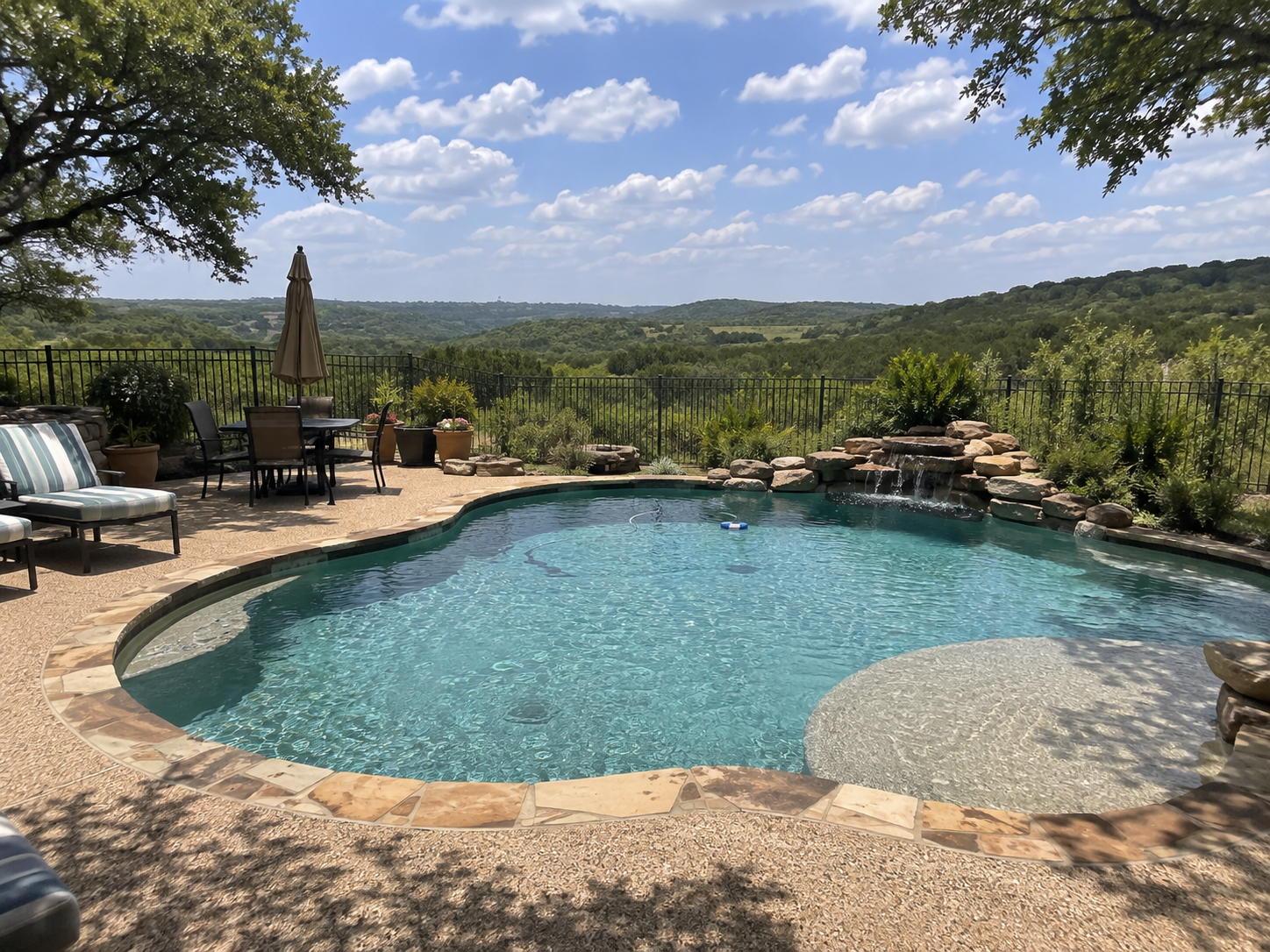
If you manage a short-term rental in the Hill Country, your pool is either your best selling point or your biggest liability. Guests book Hondo, Bandera, and Utopia properties specifically for that turquoise water and shaded patio. Blue Olive Pools works with property managers across the region, and we see the same pattern every season: pools that look fine in listing photos but fall apart under the weight of back-to-back guest turnover.
A residential pool gets used by one family, maybe a few friends on weekends. An STR pool gets hammered by a new group every three to five days, each one testing chemical balance, filtration, and equipment in ways a homeowner never would. That difference changes everything about how the pool needs to be maintained.
Guests do not treat a rental pool like they would treat their own backyard. Sunscreen, body oils, and the occasional forgotten pool toy left to sink and clog a skimmer basket are just part of the territory. Bather load is the single biggest factor in how fast chemistry drifts, and STR properties routinely see three to five times the bather load of a typical single-family pool.
As a result, chlorine demand spikes unpredictably. A pool that held steady all week with one family can crash to zero free chlorine after a Friday-to-Sunday group of twelve. Because guest turnover happens on tight cleaning windows, there is often no buffer day to catch and correct a problem before the next check-in.
Most Hill Country property managers give housekeeping a two to four hour window between checkout and check-in. That is barely enough time to clean the house, let alone properly test and balance a pool. This is where a lot of STR pools quietly go wrong.
Skipping a full water test because the schedule is tight seems harmless once. Do it for a full summer season and you end up with scale buildup, cloudy water, or an algae bloom right before a holiday weekend booking. A missed test costs far less than a one-star review mentioning green water.
We build maintenance schedules around booking calendars, not a generic weekly visit. A property with back-to-back weekend rentals needs a different rhythm than a mid-week corporate retreat house near Sabinal.
Here is the baseline routine we recommend for most Hill Country STR properties:
This last point matters more than most property managers expect. When a guest disputes a damage claim or a review mentions water clarity, having timestamped service logs protects you.
Anyone managing property in Hondo, Sabinal, Uvalde, Bandera, or Utopia knows how fast a flash flood can turn a routine week into an emergency. Floodwater in a pool is not just a cosmetic problem. It brings silt, debris, bacteria, and sometimes runoff contaminants that standard shock treatment was never designed to handle.
If a property flooded, do not let guests back in the water until the pool has been professionally tested and cleared. We have seen well-meaning caretakers dump extra chlorine in a flooded pool and call it done, only to have the filtration system clog within days because the underlying debris was never physically removed first.
Homeowners tend to notice a strange noise or a slow leak within a day or two because they are around the pool often. Property managers overseeing multiple STR homes might not step foot on a property for weeks between visits. That gap is exactly why pumps fail, heaters short out, or leaks go undetected until the water bill triples.
Automated monitoring changes this equation entirely. A salt cell that is wearing out, a pump drawing more amperage than normal, or a slow but steady water loss can all be caught early with the right monitoring setup, long before a guest ever notices a problem.
We also recommend property managers standardize equipment across their portfolio where possible. Juggling five different pump brands and three different sanitizer systems across a dozen properties makes troubleshooting slower and parts inventory a headache. One consistent system, serviced by one team, tends to break less often and get fixed faster when it does.
A lot of property managers start with whatever pool guy was already servicing the house before it became a rental. That arrangement often does not scale once you are managing several properties with overlapping guest calendars.
What works better is a service agreement built specifically around occupancy data. Blue Olive Pools pulls booking calendars directly from property managers so service visits land right before check-ins rather than on a fixed day that might land mid-stay or right after checkout with no time to fix an issue.
We also recommend building in emergency response language for exactly the situations Hill Country weather creates: flash flooding, prolonged power outages that kill circulation pumps, or a sudden algae bloom during a heat wave. Without that language spelled out ahead of time, an emergency call becomes a negotiation instead of a response.
Most STR pools need service tied to guest turnover rather than a fixed weekly schedule, which often means two to three visits per week during peak booking season. A standard homeowner pool typically only needs one visit per week. The higher bather load and unpredictable guest habits at rental properties make chemistry far less stable between visits.
Do not allow guests back in the water until the pool has been drained of debris, physically cleaned, and professionally tested. Floodwater introduces silt and contaminants that regular chlorine shock cannot fully address on its own. Contact a pool service company familiar with flood recovery before your next scheduled check-in.
You can, but it is risky for a rental property because chemistry swings fast with heavy and inconsistent guest use. A missed adjustment window between visits is often when problems like algae or cloudy water start, and by the time it is visible to a guest, it is already a review risk.
Yes. Property manager contracts should account for occupancy-based scheduling, emergency response times, and photo documentation for liability purposes. A standard homeowner service plan is not built around guest turnover or booking calendar syncing.
Treating it like a homeowner pool on a fixed weekly schedule instead of syncing service to actual guest turnover. This gap is exactly where chemistry problems and guest complaints tend to originate.
Rental properties benefit from durable, low-maintenance equipment and, where possible, automated monitoring that can flag problems between service visits. If you are managing multiple properties, standardizing equipment across your portfolio also makes troubleshooting and repairs faster.
If you manage short-term rentals anywhere in the Hill Country, from Hondo to Utopia, Blue Olive Pools can build a maintenance plan around your actual booking calendar instead of a generic weekly visit. Book a consultation to talk through your portfolio and get a plan in place before your next busy season.