March 31, 2026
Because we clean for turnovers, we have direct visibility into which Texas Hill Country vacation rentals and STRs are booked more often, which ones sit more.
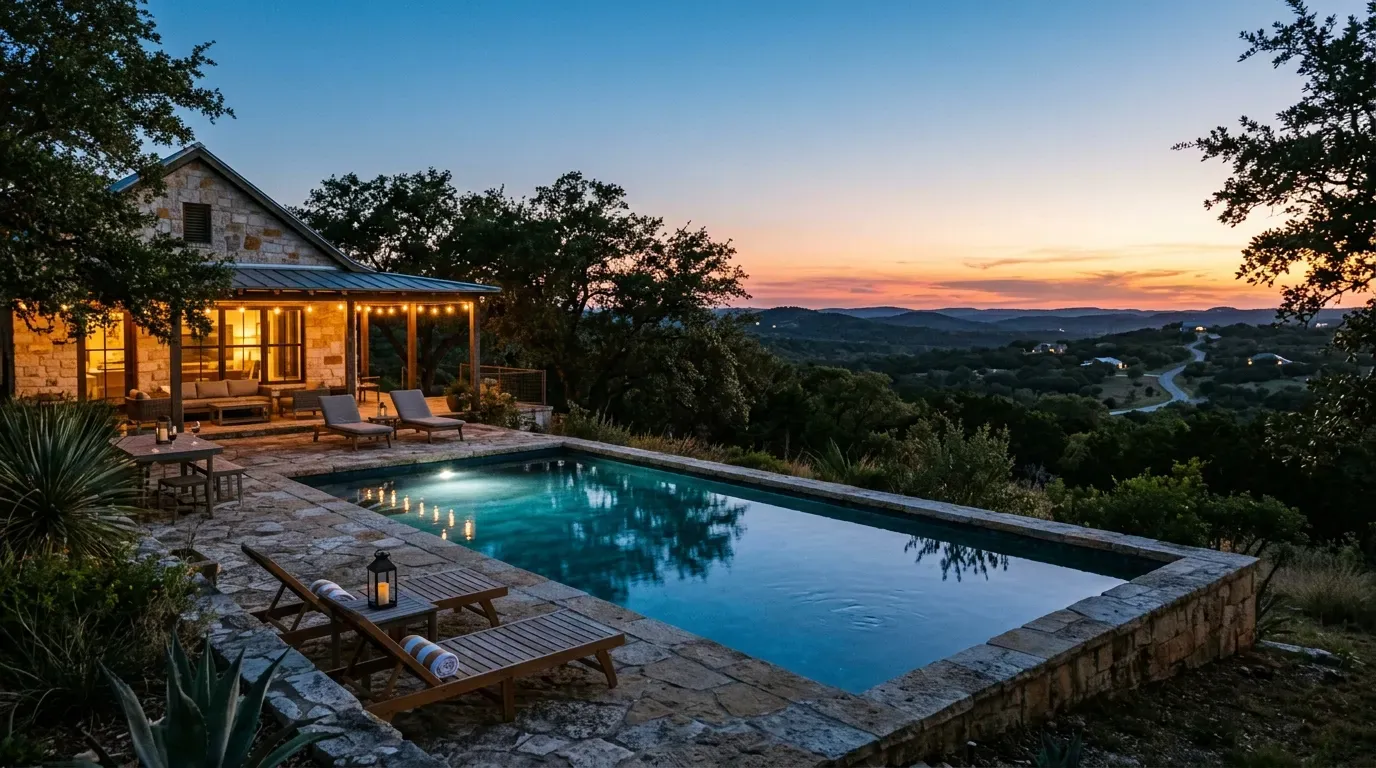
Over half of our work at Blue Olive Pools is in vacation rentals, STRs, and resort-area properties. The rest is in owner-used homes that are not in regular rental rotation.
That gives us a useful point of comparison.
Because we clean for turnovers, we have direct visibility into which vacation rentals are booked more often, which ones sit more, and which operators are running their properties with the guest in mind.
From where we stand, the properties getting booked more consistently are usually not just nicer. They are better-run.
That matters in the Texas Hill Country, especially in a market where tourism and vacation rental demand have faced pressure for a variety of reasons. When conditions get tighter, the gap between a nice property and a well-run one becomes easier to see.
The strongest vacation rentals do not just have better amenities. They connect operations, marketing, and hospitality better.
They are easier to use. Easier to support. Easier to market. And easier to book with confidence.
A few patterns stand out.
A pool is already a meaningful amenity in this market. Heated pools and hot tubs can make a short-term rental more competitive by extending usability into the shoulder and off-season.
A pool heater can be a strong investment for properties looking to drive bookings and revenue in the shoulder and off-season.
But the differentiator is not just having the amenity. It is managing it properly.
Some of the property managers we work with charge a heated pool fee to offset the added expense, and we work with them to estimate propane usage so owners and investors have a clearer picture of the real operating cost. That allows them to offer the amenity strategically rather than absorbing unnecessary extra cost or underpricing it.
The takeaway is simple: amenities add more value when they are operationally planned for, not just installed.
The stronger vacation rentals are often easier for families to use.
That usually has less to do with bed count and more to do with friction. STRs that feel more dialed in for family travel tend to include practical items like high chairs, pack and plays, play pens, baby gates, shade, and enough seating for families to comfortably use the outdoor space.
These are not flashy upgrades, but they make a property easier to book with confidence, especially for guests traveling with small children.
A lot of short-term rentals try to compete on standout features while overlooking the basics.
The homes that feel best prepared usually get the basics right: quality linens, enough extras, kitchen essentials, spices, and the everyday details that make a stay easier once guests arrive.
In many cases, stronger vacation rentals are not winning because of one major differentiator. They are winning because they remove friction in a lot of small ways.
This is one of the most overlooked differentiators.
The properties that tend to run best usually have strong relationships with local service providers who can respond quickly and understand that guest experience comes first.
That includes pool service, but it goes beyond the pool. When something goes wrong, whether it is equipment, a maintenance issue inside the home, or another operational problem, speed and communication matter. The better-run properties usually have vendors who know the home, communicate clearly, and understand the urgency that comes with a hospitality-driven asset.
A good vendor does not just fix problems. They help reduce guest disruption.
Not every service provider is built for vacation rental work.
There is a difference between servicing a private home and supporting a short-term rental. The vendors who are the best fit understand that delays, poor communication, and inconsistent work do not just create inconvenience. They affect stays, reviews, and future bookings.
That mindset shows up quickly. Some vendors treat guest-facing urgency as part of the job. Others do not.
The properties that perform better tend to work with the first group.
The stronger vacation rentals also tend to be marketed more intentionally.
They are usually not relying on one booking source or taking a passive approach to occupancy. They combine OTAs with social media, direct promotion, and discounts when those discounts serve a purpose.
That does not mean discounting broadly. It means using promotions selectively to support shoulder-season demand, fill calendar gaps, or encourage longer stays without weakening the property’s positioning.
They also tend to present the property more clearly. Better photos, clearer positioning, stronger reviews, and a lower-friction booking experience all help convert attention into bookings.
The point is not to chase bookings at any cost. It is to stay visible and make deliberate decisions.
One of the clearest patterns we see is that the stronger STRs are not just marketed better or operated better. They connect the two better.
The condition of the property, the responsiveness of the vendor network, the guest experience, the reviews, and the listing’s ability to convert are all tied together. The operators who understand that tend to outperform the ones who treat these as separate issues.
The best vacation rentals understand that operations is marketing. A well-maintained, guest-ready property creates a better stay, better reviews, better word of mouth, and ultimately better booking performance.
This may be the biggest differentiator of all.
The short-term rentals that tend to stay booked more consistently are usually the ones that genuinely put the guest first. They do not treat guest needs, questions, or issues like an inconvenience. They understand that hospitality is not just about the property itself. It is about how the guest experiences the stay.
That can be difficult in practice. Managing properties and dealing with people is not easy. But the operators who do it best are the ones who make guests feel considered, supported, and taken seriously.
In a competitive market, that mindset matters just as much as the physical asset.
From our vantage point, the vacation rentals and STRs that tend to stay booked more consistently usually have a few things in common:
amenities that extend usability into the shoulder and off-season
family-friendly features that reduce friction
strong execution on basics
dependable local vendors
service providers who understand hospitality
more intentional marketing
selective use of promotions
operators who put the guest first
None of that is especially flashy.
But it is operationally meaningful.
In markets like the Texas Hill Country, the gap is often not just between average properties and luxury properties. It is between properties that are being actively operated and properties that are simply listed.
We are not claiming to be the final word on vacation rental performance.
But because we are inside these properties every week, and because over half of our work is in vacation rentals, STRs, and resort-area homes, we do have a close-up view of what appears to be working.
What we continue to see is this: the properties getting booked more consistently are usually not just nicer properties.
They are better-run ones.
Own or manage a vacation rental or short-term rental in the Texas Hill Country? Blue Olive Pools helps keep hospitality-driven properties guest-ready with maintenance, repairs, and responsive support built for the realities of resort-area homes.